
Services
Thermal Imaging
Thermal imaging involves the use of a special camera which senses infrared light. The infrared camera does not show images in full color, the way our eyes see. Instead, it uses a preselected color spectrum to display cold areas as one color and hot areas as another color. Infrared cameras (a.k.a. thermal imaging cameras) have become an important tool for home inspectors for many reasons:- They can help us easily find air leaks in HVAC ductwork, around windows & doors, in & around chimneys, and in other areas of the home.
- They can be be useful in locating hidden water intrusion. That's because a wet area will typically show up as a cold spot on the IR camera. As water evaporates, the wet material loses heat and becomes colder than the surrounding dry areas. It's important to note that IR cameras are not X-ray cameras and cannot see through building materials. IR cameras must never be relied on by themselves, since they only show temperature differences. They must be used in conjunction with other tools & devices (like a moisture meter, for example), to confirm the presence of water.
- IR cameras can be useful in finding certain electrical problems. For example, if the IR camera shows that a circuit breaker is excessively hot compared to the adjacent breakers, it could mean that this circuit is overloaded. Also, if an electrical wire connected to a light switch shows up as excessivley hot, this could mean a loose connection. Any unusually hot areas in an electrical circuit typically require further investigation by a qualified professional electrician.
- Thermal imaging cameras can be very useful in finding hidden plumbing leaks. As water leaks from hot or cold plumbing pipes, it will change the temperature of the surrounding building materials.
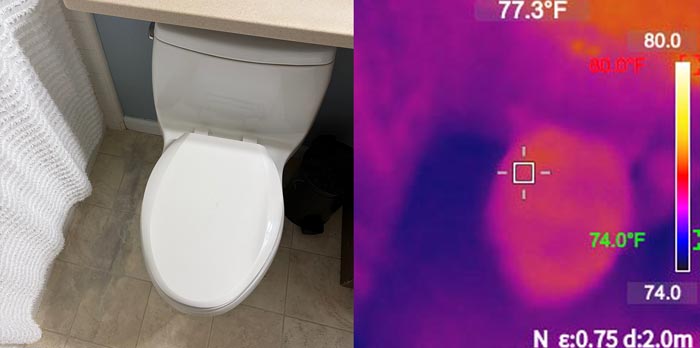
The example here shows a toilet and a water-damaged linoleum floor. Typically, this kind of staining is caused by a failing toilet wax ring. In the thermal image, this area appears dark purple and is colder than surrounding areas. It's important to note that the wall behind the toilet is an interior wall. If it was an exterior wall, a cold area on the floor would be normal on a cold day. Further testing with a moisture meter confirmed the obvious: the flooring was indeed wet underneath. No thermal imaging was needed, right? Next, we'll look at some other examples that are not so obvious.
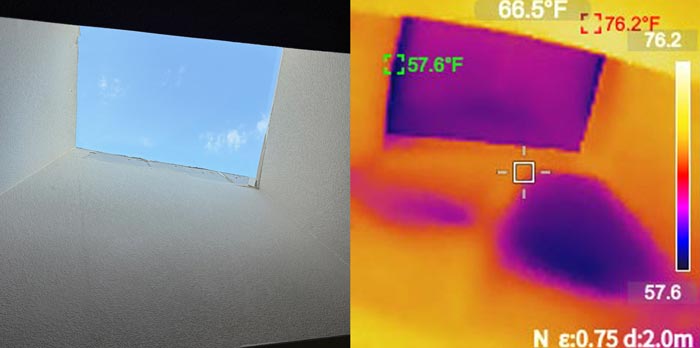
In this second example, the thermal imaging camera detected a cold area in the wall below a skylight. Is it a water leak? Not so fast! Remember, infrared cameras cannot find water—they just show temperature differences. Further testing wtih our moisture meter showed the sheetrock here was dry. Hmm...what do you think it could be?
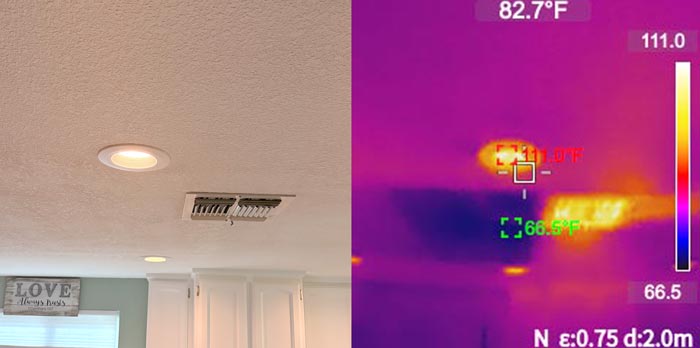
This third image shows a kitchen ceiling with a dark purple rectangle-shaped cold spot. This is a typical example of missing insulation. It was probably moved out of the way when the kitchen was remodeled and was never put back. Further inspection in the attic confirmed this. Notice the warm air coming out of the adjacent ceiling register. It's hard to save money on our heating & cooling bills when our home's insulation is missing! As you can see, you can improve your home's energy efficiency and save money by using thermal imaging.
Check back often, as we will be adding more services and certifications to our list!